|
| Vivi-Mari Carpelan: "The Heart's Desire", copyright 2000 I believe our hearts may look something like this. This was just before muscle spasms made it difficult for me to draw. |
I decided not to add to my previous blog post, which is about a specific problem, but write a few words as a follow up. There's a discussion on LinkedIn in response to the article I posted her on my blog at the very end of the last article, but I don't find the viewpoints very clear. One thing seems quite obvious, though, and it's the fact that the big money making names in the art world are domineering the art scene, but also what is being taught in the art schools. You may recall my post about the exhibition I visited in Cardiff - it looked like a graduate show made up of ideas from a text book about conceptual art, and it was very clearly young and immature. There are alternative artists out there, but they don't get very much support as far as I can see. For instance as Martin has been looking for funding, he has found very little that addresses the needs of the individual artist. The funders, especially the Arts Council, are often more interested in supporting events that bring in large audiences so they can count the number of seats that were occupied. The other problem is very obvious; if you do work in 2D you're "passe". This is ridiculous, since human beings will never stop putting their thoughts and feelings onto a flat surface.
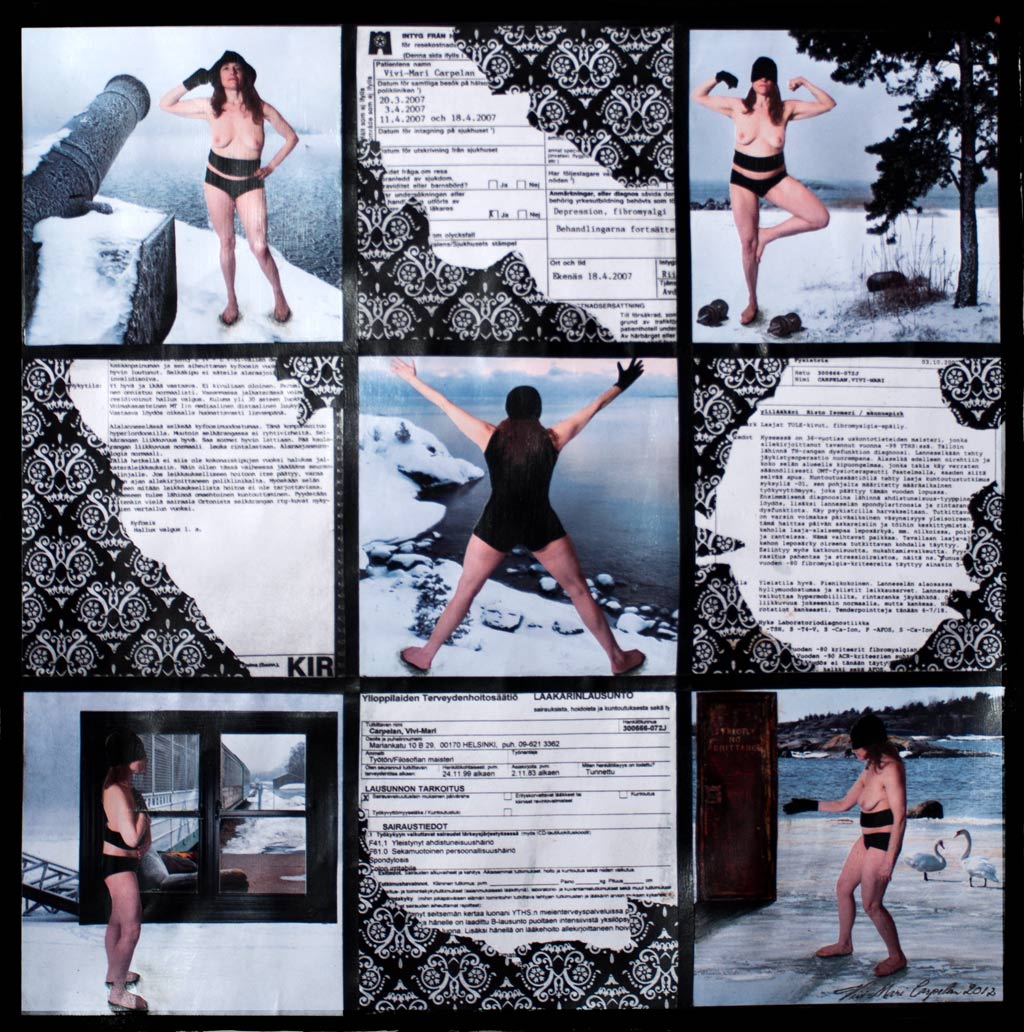
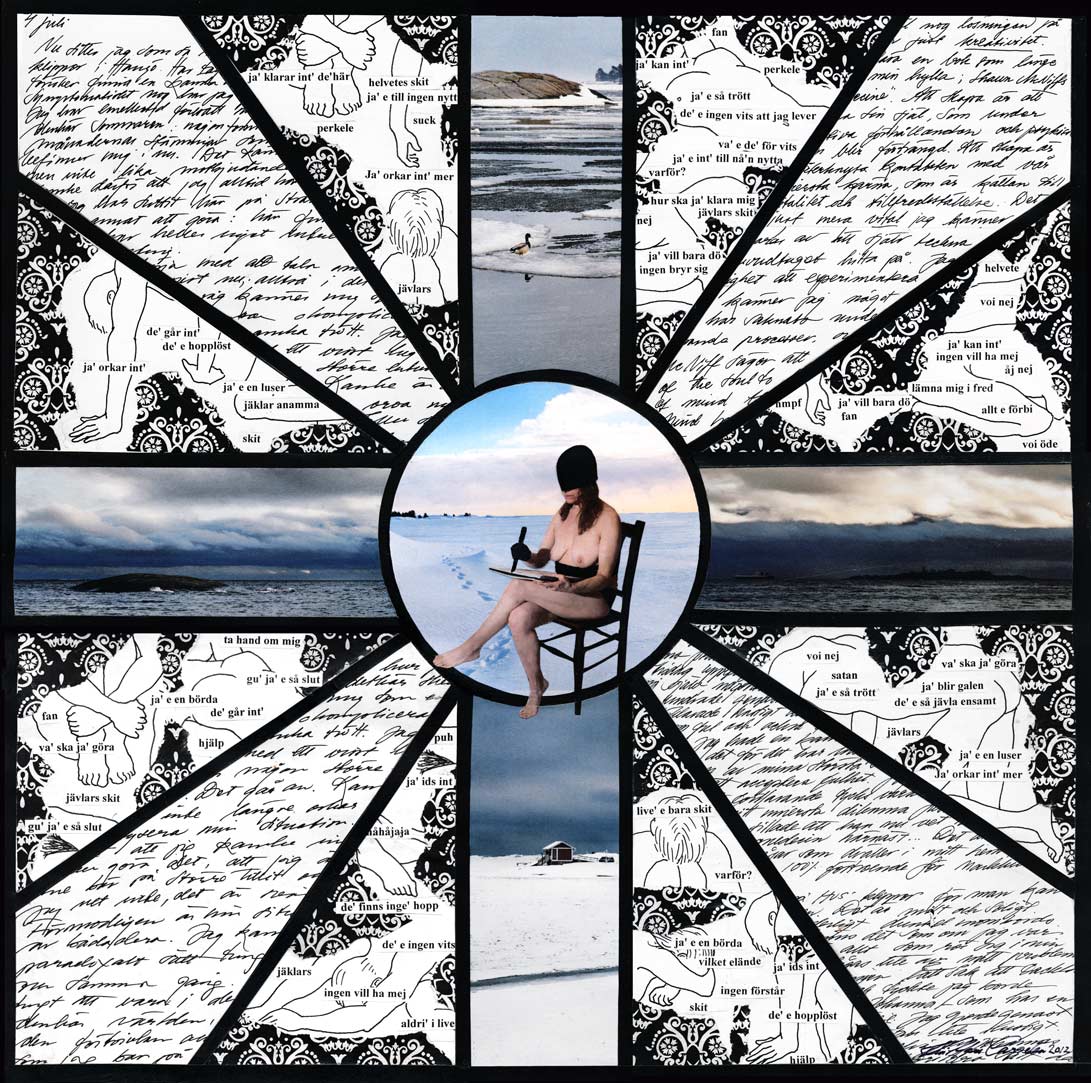
Michael Schwartz is a distinguished art critic in the USA who has abandoned the usual contemporary art scene in favour of a more spiritual and uplifting kind of art. I had the honour of having my art seen and written about by him when I was accepted into the integral art gallery at intergrallife.com. Here is a video in which he explains "what is so special about integral art". I don't find it very comprehensive but if you're interested you can look up a lot of articles and talks on the site (some of which you have to be a member to see). The art galleries are all available to the public and you'll find that the artists are often very articulate and obviously highly intelligent beings. Although I keep these aspirations and attempts to promote a new kind of art in very high regard, I do sometimes wonder if it's still a bit limiting. These people obviously shun art that only reinforces all that is sick in society. However, they are also adamant about the presence of the "shadow", that darker side of all of us that needs to come into the open so that we can evolve as spiritual beings. What concerns me is that art such as my Project X would not go down well with the integral community because it might be seen as negative. My object is not to dwell on negativity but to inform an audience about the existence of certain problems within society. These problems need addressing very urgently.
I have digitally remastered photos of some of the art I did back in the 1990s. Back then, I was consumed by my research into spiritual matters and Eastern philosophies in particular, but it's also true that there is always a tension in all of my art between what I believe life to be in a deeper sense and the situation I find myself in this particular body, in this particular reality. This tension may be part of the reason why people wanted to buy my art back in the 1990s in Finland. At some point I felt that I had come to the end of my mission to talk so explicitly about what we can be and I thus started to look for an alternative. It took me a good ten years to specify what I felt I had to do. While my disability or issues of marginalization in general were at the back of my art in the 1990s and my spiritual world view was at the forefront, the concerns are now turned around so that invisible illness and similar issues are at the forefront and my spiritual world view is at the back of it all. I feel no urgency to talk about my world view with anyone and therefore I know that it's not my job to do so.
Michael did say to me that it's not very common for artists to be able to talk about their own art, and that he found me unusually articulate. I enjoyed his interpretation of my art but I'm not sure I want it to be as much about memory as he suggested. I have to say that I often find myself lacking in words and less articulate than I used to (considering I'm a very literal person and sometimes behave in a straightforward, incredulous manner almost as if I had Asperger's syndrome like Saga Noren in "The Bridge"!). Perhaps it's a good thing, perhaps we should not always be able to pick our art apart. After all, a picture or other visual experience is supposed to say more than words can describe. However I was reminded that the bad philosophy I was talking about in my previous blog post also is a problem because artists are being pushed to being verbal and while I personally like a bit of explanation, it's possible to explain art to death.
I think the pendulum has swung far into two extremes as we now find a contemporary art that is fragmented, contrived and shallow while mirroring only the worst aspects of society (both in terms of context and the way it's being treated by the "authorities"), and a spiritual art that is all about subtle and causal energies and Eastern deities, or the tree of life. While the latter can be elevating, it often lacks a direct connection to mundane life as we know it, and therefore I don't really see how it can make a difference to the layman. I say let's find a golden middle path. This has always been my ambition, no matter what I do. I also believe that the pendulum of human evolution eventually finds the middle. This is a Hegelian concept that I fully believe in - thesis/antithesis>synthesis are an inextricable part of the evolution of consciousness). All art forms and expressions must eventually be found equal, this I believe to be one aspect of the golden middle path. Another thing is, the idea is not to make everything the same shade of grey, but to appreciate diversity. As for contents and meaning, I do feel that art should be constructive and helpful, rather than just depressing and the perpetuating of negative myths or behavioural patterns. I personally believe there is a compromise to be found, one where art can point towards anomalies but also inspire (I'm trying to achieve this myself). But before that we will see a lot of extremes and finding the balance might take a bit of time. One of the extremes we will see a lot of these days is decadent art that copies other artists and art that has been before (the robotic artists in China being a great case in point, but that's the extreme of the extremes). As I found in an investigating documentary I watched the other day, this is the era of an extreme indulgence in the copying of things we have already seen and experienced before, as if that brings human some comfort in a disconcerting world.

AP
China's Art Factories
Here is the art of the past that I have edited so far. The text is from an artist's talk I'm doing soon for the Disability Arts Cymru. I think it's alternative art, at least it's art about the human psyche that the authorities never cared much about and I soon learnt to keep away from them.
 |
| "The Realm of Water - Level I" 2002 mixed media collage, sold This piece is about the subconscious mind |
 |
In “The
Chrysalis” (mixed media drawing) 1998), there is the idea of the possibility of slowly coming
to life while on the other hand feeling boxed in by the limitations
that my condition was imposing on my life. The figure is waiting for
change. Tension, stress, tiredness and pain were all part of my daily
life while I was struggling to keep up with everyone else.
|
 |
In “The Sacrifice” (mixed media drawing 2002) you can see that while I believe there is something greater behind
us, so to speak, I also felt that the acquisition of a greater
understanding of life was a kind of sacrifice. It was like Eve eating
the fruit of knowledge, yet it was necessary as ignorance was not a
choice. I was tied to the Earth, and I had to let go of any
resistance towards life. In fact a greater acceptance of my situation
helped me overcome some of my physical and emotional problems. It
seemed increasingly important to focus on the issues here and now, in
this reality.
|
 |
"Those Who Wait Will Be Rewarded", (mixed media drawing 1999). One of the most
important ideas was however that reality is fundamentally a paradox.
In this picture, two realities are intertwined. There is one in which
the communication between humans is difficult, there is a block of ice between them
and the atmosphere is cold. The other is warm and sensuous,
symbolized by a cat and a tree of life with roots deep into the
ground. In other words, there are always two sides of the coin, but
it's the same coin. In a deeper sense, life is not divided into
opposites as it seems to the human mind, but one integrated whole.
|
 |
This picture is
called “All the World is But a Stage” (mixed media drawing 2002), which not only explains
that I think of life as a kind of theatre or school, but it also
depicts the opposites of summer and winter and the idea that there is
a unifying element and life force behind life as we normally see it.
Being in touch with this life force is vital to our well being
regardless of how disabled we are.
|